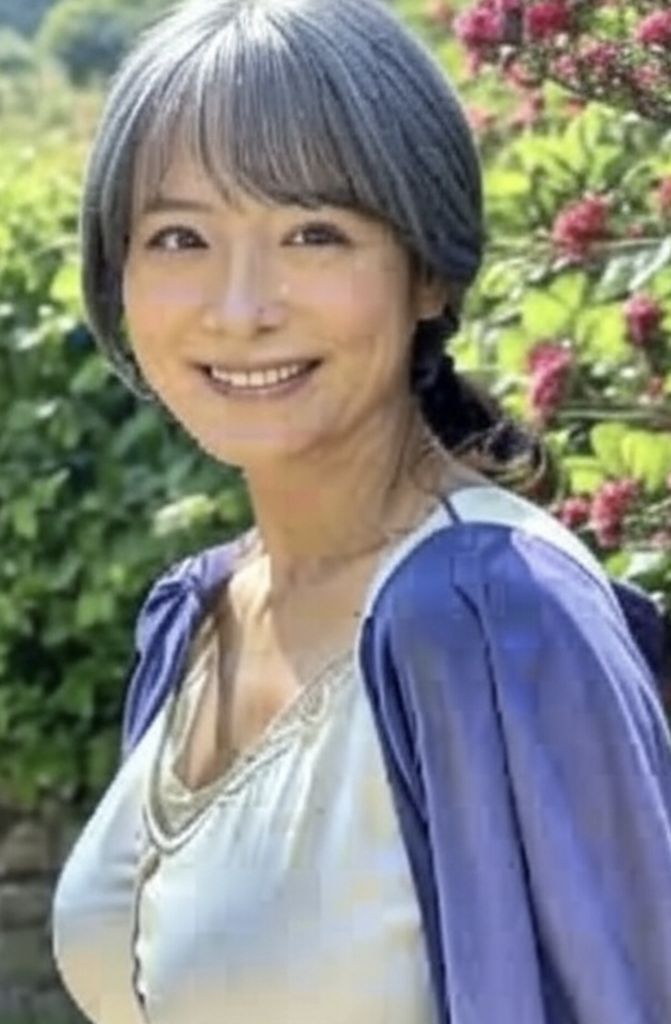
“Look. I know that I fit the demographic who is out for action, but I can assure you that I’m a happily married woman who just happens to have an interest in French culture,” says Seisekisakuragaoka resident, Kiyomi Hatanai.
I’ve asked Hatanai whether it’s true that every female French language student longs to get down to business with her teacher. In my defence, she fits the bill. Married with two children in junior high school, she now has time on her hands to do what she wants. She’s still attractive, and she still has the desire to improve her pretty impressive language skills.
If there’s an odd number of students, the teacher will team up with the babe.
“It seems that every role play involves me standing up and moving around the room. I know these lecherous French guys just want to check me out and I guess I’m a fool for going along with it. They’re all married to bunny boilers who saw France as a kind of magical place where sophistication reigned and accordion music was played ever so gracefully.
“These kind of women will see their bubble burst when they realise that their husband was just an overeating lazy guy with nothing to offer, who sweats garlic in his sleep. I feel the sadness and desperation in the male teachers’ disposition. They don’t get any respect at home. I guess if I can’t excite them with some lingering eye-contact and a smile, then I’ll lose my sense of femininity. That’s all I’ll give them though. Let me make myself clear; my husband is a rock climber, so he’s far more masculine than any of those X-box addicted teachers.
Don’t freak out! This guy’s creepy, but he’s promised to wait until after graduation.
“I like Sylvie Vartan, Bridget Bardot, and Beatrice Dahl. I never got excited over Alan Delon or John-Paul Belmondo, so these run-of-the-mill French guys aren’t going to get me wet. My teachers don’t seem to get that, unfortunately. Sometimes I’ll deliberately frustrate them by discussing Tintin or Baa Baa the Elephant, because I know the French man is much more comfortable gently caressing the conversation towards anything sexual.”
Emmanuel Benaud, a teacher who is employed at the school which Hatanai attends (although he is yet to teach her formally), sat down with me at a well-known bakery in Suginami ku which features a stylish, yet small, dine-in area. The 44 year old from Lyon showed concern over the image of all French language teachers being a bunch of pants men giving female students a jolly good rogering in secluded areas of the school during seasonal parties. “Let’s ask ourselves; what exactly happens in a French language classroom?” asked the dashing grammar expert.
Just try to be professional and remember to include the male student in the activities.
“What comes out of my classroom? Let me tell you the answer; French speakers emerge from my classroom. It makes my job a joy rather than a drudgery. This is something objectively good, seeing a different spirit emerge out of the same soul. It’s something that simply cannot be reduced to numbers and data. Every sentence begins with a thought. Just like if you want to build a house; you must first imagine that house in your mind. A thought is a spiritual reality. And then you manifest it in another language, and not just any language.
“We’re talking about the language of the auteurs, the revolutionaries, and the raconteurs. It’s a way of bringing cultures and worlds together. This is the original glory of the vocal arts and, when you see the flower in the garden bloom, it is only natural to become incredibly aroused simply from the satisfaction of observing the achievement. It’s a biblical experience, and you must never judge a language teacher for overstepping the line once you are aware of such context.”
Part 1 of our special “foreigners who are more Japanese than Japanese” series
Farewell to the big smoke of Tokyo. Hello to the peace and quiet of Obutsu.
Most Europeans and North Americans who choose to live in Japan end up living largely minimalist, unremarkable lives in the major coastal cities or, to be more accurate, on the outskirts of the major cities. Occasionally, however, a more spirited character will come along and venture into the interior to live out some kind of Tottoro fantasy, which tends to bring mixed results. Some will be warmly welcomed into the aging community and lend their muscle to various projects, while others may be either shunned or find that their newly-bought house falls down around them, with YouTube tutorials unable to provide solutions.
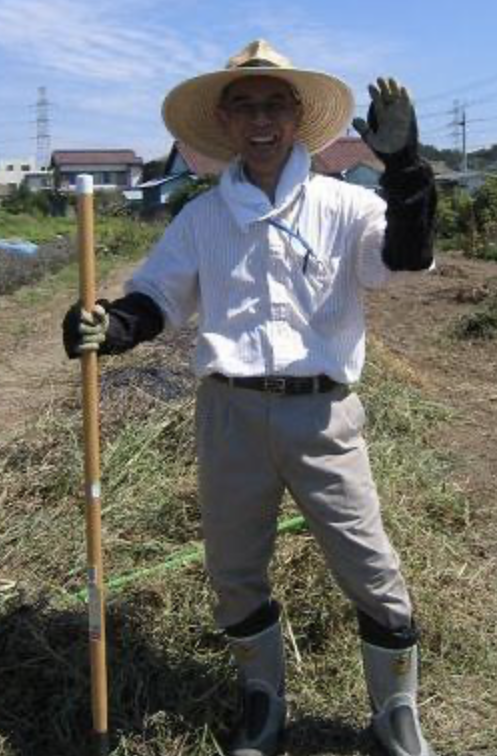
Just a stereotypical friendly farmer enjoying his work.
In the case of Vancouverite Garry Langley, it’s been a long and winding road, both in his life, the location of his house, and his much-maligned tour company. “I have a tour. It’s a fantastic rural tour. The Italians love it. I tell them a few overly sexual stories about the goddess Amaterasu which would disgust most people, but not the Italians. They find it all quite titillating,” he explains. “Sometimes I’m so busy that I do three tours in a month. There are many mountain roads, so motion sickness is always a factor. My clients will break down and cry, demanding that I just find a shady place and pull over. The hairpin bends really affect the stomach after a couple of hours, and some people can’t handle it at all. This leads to people calling me an inconsiderate prick and aggressively asking why I didn’t hand out pills before the tour began. Then they give me nasty reviews online. Few people see those reviews though, so it’s ok.”
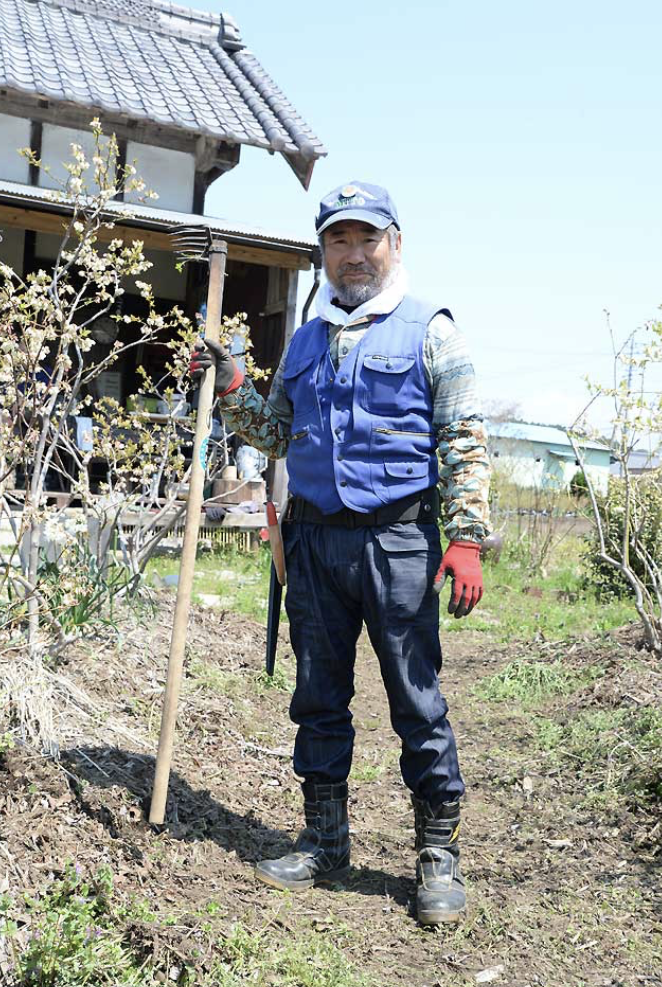
This bloke’s both a farmer and a kendo master. It’s up to you how he uses that hoe.
Given time, the tour company may still become a success. Only a complete economically-illiterate buffoon would be so silly as to predict that Langley’s tour company will dry up and wither away to nothing, wasting tens of thousands of dollars from his family trust back in Canada in the process. Optimistic to a fault, and eager to use the interview to sell his tour, Langley continues, “Sometimes we stop for some exotic bear soup at one of the quaint old eateries along the way. Bears in this area generally have fewer parasites than bears in other parts of Japan. I reassure visitors with this fact just prior to everyone picking up spoons and savouring the unique flavour.”
One of the local farmers. If you’re nice to him, he’ll be nice to you.
Over delicate sips of green tea at his kotatsu in his sparsely decorated living room, Langley described his idyllic country lifestyle. It had been a few weeks since I’d heard about this fascinating “more Japanese than Japanese” westerner, and I had built up a load of questions to satiate my curiosity in the meantime. “I love how accessible nature is out here in Obutsu. There’s a small river where government officials say it’s safe to swim depending on the amount of artificial fertiliser that’s been used on surrounding farms during growing season. I like to go fly-fishing there. I once caught a fish 8cm long in that river. I go down in the morning before the junior high school boys wake up. Otherwise they’ll throw stones at me and shout nasty things.”
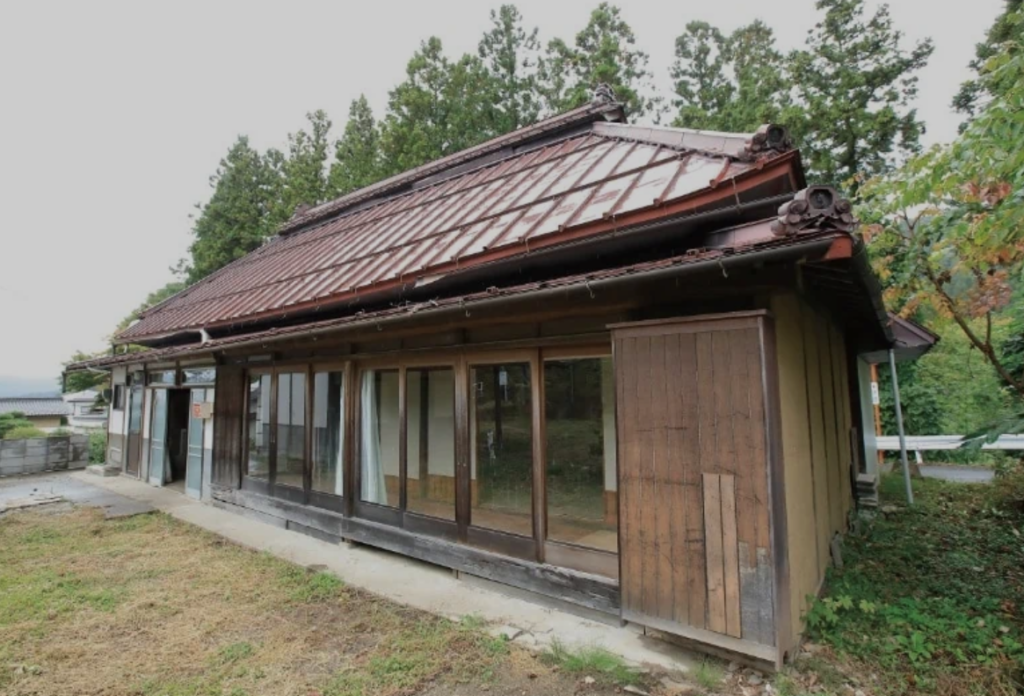
A bit of a countryside fixer-upper.
Locals needed little prompting before providing their opinions of their Canadian neighbour. “We thought it would be great to have someone from overseas contributing to the community, but this guy is, quite frankly, good for nothing,” says 63 year old Egui Kocho. “He’s the last person anyone calls on to help out on their farm.” This unkind and blunt opinion of the 47 year old Langley, a language teacher who made the leap into the Ibaragi countryside four years ago, is one that is commonly held amongst the locals. For Kocho, a lifelong farmer who knows the mountains and the rivers like the back of his hand, Langley’s move to the sleepy farming district fills him with enormous anxiety for the future, as he knows that there could be more unskilled western city slickers on their way.
Locals gather to work together on a project, without the help of Langley.
“We’ve seen him fly-fishing in the streams around here many times,” chimed in 72 year old Hajiku Mane. “By that I mean that our lives are so boring that we just watch him for hours just to see if he does anything that we consider weird. To be honest, he never really does anything weird. He’s just a regular, boring kind of guy. I guess that makes us the weird ones, just observing an unremarkable foreigner for hours on end. Anyway, we always see him catching undersized fish. There have been no regular sized fish in this area for fifty years due to the mistrust and impatience of every fisherman around here. That’s how we know that he’s catching undersized fish. It’s quite pathetic to see men going home with a bucket containing five fish which are as long as your middle finger. We all dream of catching barramundi in Australia, but we just have to pretend to get excited over fish which are depressingly small.”
The biggest fish caught in Obutsu last year.
When not fighting a losing battle at home to keep his floors dry and level, Langley can be seen accompanying his still bangable (but only just) wife Junko to the village once a week or so. “Junko really loves interacting with other locals,” says Langley. “She often gets into deep and animated conversations with them, so I tend to drift off and go back to the car where I look at Facebook while I wait for her. I don’t want to get in her way, and I want her getting some fulfilling human contact that she might miss out on due to living in our isolated little patch of Japan. It can get lonely out in the woods, so I don’t begrudge her socialising when she gets the opportunity, and if that means that she might occasionally get spit-roasted by two teenagers who are spending school holidays with their grandparents, then so be it.”
The slightly lonely country lasses enjoy any chance for social and cultural adventure.
Of course, the big question remains; has this tree-change been worth it? Are there any regrets? Langley takes his time to respond, taking in the green vista as he chooses his words carefully. “I wouldn’t say that I have regrets, as such. I don’t miss the commuting or singing Old McDonald to the kiddies. I’m happy to be free from that. You can have your urban conveniences, your sophisticated neighbors, and your network of fellow westerners. I’m doing it nicely and easily out here in Obutsu, where I just blend in with the locals. This house has all the country charm that I need, and more. Sure, in any other G20 country it would be classified as derelict, but you need to remember that I’m one of those people who are into old Japanese stuff to the point where I get irrationally emotional about having an engawa and a shishiodoshi.
The shishiodoshi is a must have in the Japanese countryside.
“You have to remember that as a white man, no matter where you’re from, some locals assume that you agree with whatever an American President has said about anything that week. But, be that as it may, I would like it if more people followed me on social media. What I’m doing is remarkable and noteworthy. I am kind of a cultural pioneer who deserves more credit. So, yes, I would appreciate it if more people were to acknowledge what I’m doing out here. I’ve taken the big step, and now it’s up to other people to speak admiringly of me.”
“My life has no geographic or political boundaries,” says Clint Wilkinson. “Just because people are on holiday in this archipelago currently known as Japan, doesn’t mean that they have to eat sushi and yakitori.”
Wilkinson, from the mid-northern lower central tablelands of New South Wales, is sitting in his latest project, a fusion cafe in impossibly hip Shimokitazawa. The Knobsack (for that is its name) sits just off the junction of two funky alleyways between a shop selling loophole drugs and another shop selling all kinds of shit that you don’t need. The Knobsack is the main attraction though, just a quick glance at the menu results in an involuntary quivering in the loins, and that’s completely understandable.
“You’ll find that everything we dish up here comes from sustainably sourced ingredients,” boasts Wilkinson. “Our customers come for the coffee which is lovingly roasted from Indonesian coffee beans. So, they come for the coffee, but stay for the food. We don’t hide the flavours here – we elevate them. From our smoke kissed steak to our roasted goat which is faithfully cooked in accordance with a Moroccan family’s handwritten recipe, our menu is something which people marvel over.”
The early news is good; customer numbers are up and the day-to-day running of the business is smoother than one of the malt shakes on offer. “Obviously, we work closely with our suppliers although at this point I’d rather not give any one of them particular praise,” says the obligatorily facially-haired veteran of the inner-city Sydney cafe scene. “I think across the local area we’re doing a lot of things, some of the impressive moves made by the local business community and the city government show that we’re all making good steps forward. I think we’ve got a lot of work to do and we actively look forward to participating in future conversations, provided that my voice is the loudest in the room.”
“Right now, however, we need to keep the momentum going and stay focused on sustained improvement,” explains Wilkinson as he rubs one of the characters on his heavily tattooed forearm, perhaps in a bid to elicit praise from me. “As far as our local business associates are concerned, we’re talking about sharing granular ideas and nurturing common threads, no matter how small they may be. I believe in building on the base, tapping into undiscovered trends, and moving forward in a positive way. Incremental change and duplicating positive responses have always been important to me, as you never know what the ramifications could be in the long run. I don’t want to be accused of being pie in the sky, but it doesn’t hurt to dream a little. That’s what they say in all those books. Believe me, I’ve read ‘em all.”
Bringing compassion, consideration, and long-term broad-minded thoughtfulness to business can be hard at times, but Wilkinson still manages to keep a handle on things. His innate cool can be seen through such things as his Aboriginal flag on the wall, his 1970s vinyl collection, and his vast wardrobe of Okinawan shirts. “They’re actually called Kariyushi shirts,” he asserts. “Kariyushi means “harmonious” or “happy occasion” in the Ryukyu language. It’s a quite a versatile word, when you think about it. Don’t judge their language though. If they want to have a word that can mean two things which aren’t really the same, then that’s part of the beauty and mystique that some westerner like you will never fully understand. I like to think of The Knobsack as a conduit for these cultural concepts. Coming here to this part of Tokyo invariable becomes an educational experience for many of our ignorant cashed-up customers.”
Wilkinson grew up in a theatre, where from childhood he learned the importance of fostering spaces where connections are made. He understands the vital role a cafe can potentially play in a community. “For the kind of people who read Tom Clancy books or wear smart watches, a cafe is just a place to get a hot beverage. But, for the romantics, the gypsies, and the sophisticates, it’s a space to absorb knowledge and exchange culture. It’s a social hive that doesn’t just accept social diversity, it embraces it and thrives on it.”
Deflecting away from the reasons that led to the closure of his cafe in Sydney and his hasty move to Tokyo, Wilkinson gushes over the attractions of his new abode. “Tokyo sucks you in. It’s a city of adventure. I don’t get much time off, but when I do get away from The Knobsack, I like to jump into a Mari Cart or go to Asakusa for a rickshaw ride. I’m a sucker for the school classroom experience too when I put on the school uniform and learn how to do origami or shodo with other westerners. What else do I get into…? Let’s see… Oh! Those Ueno rub ’n’ tugs are always a joy. You can even get a cheeky walnut if you get an attentive server. I love checking out the maid cafes and owl cafes, too. I don’t consider them competition as we cater to different markets. They’re just all part of the tapestry of Tokyo, and I consider The Knobsack to be a part of that too, just in a much more spiritual and artistic way.”
Riding in Japan can be an exhilarating experience.
There was a buzz around the foreign cycling community in Japan this week with the announcement of an exciting initiative that aims to ultimately end all that fear and loathing that is experienced by those on two wheels. “We’ll tell you when and where you should be riding on the sidewalk, and when and where you should be riding on the road, and then adding numerous exceptions to this advice,” explained group co-founder Mah-Son Zung.
Zung and co-founder Stephen Liao came up with the idea while sharing a hospital ward after being involved in separate traffic accidents on the same day. “Coincidentally, both of us were car-doored on a notorious stretch of Nakano Dori,” said Liao. “Fortunately, we were both wearing gloves and helmets. We were also wearing vivid lycra outfits, although they didn’t have any real effect on reducing the impact of our collisions.”
Liao and Zung became good chums while recovering from their accidents.
Liao went on to provide a background for the reasons behind the new initiative. “There already is some information out there among riding groups. A few of these groups have bizarre rules of their own though. They can set high standards, both in speed and in bicycle condition. They can be unforgiving. In the past members have been kicked out for such things as wearing mismatched socks, wearing the same run-of-the-mill polo shirt three weeks running, and failing to order adventurously at the mid-ride cafe.”
Liao, a 47 year old Chinese-Canadian bond trader from Vancouver, and Zung, a 39 year old Korean-American exporter from San Francisco, discovered that they shared a passion for riding, and used their recovery time productively in brainstorming ideas that would help the cycling fraternity handle the Kafkaesque, Orwellian, and Dickensian nature of traffic law enforcement.
This medical emergency professional can smell an accident brewing, and places himself in the danger zone accordingly.
“We’re not just about commuting or looking cool in skintight kits,” insisted Zung. “We’re all about getting our incidents with cops analysed, and then hopefully get concise data and papers written so that we can have a consensus among the biking community that at least one of these cases is truly typical of what’s going on around us. We’re going to be informing of all the changes to bicycle rules updated on a nearly daily basis. This is a new support group that has just been formed to focus on pedal power. Cycling is one of the most respected forms of transportation and here we are reporting honestly on commuting and getting around town, not necessarily in the light that cyclists want to be seen.”
“I hasten to add that being a cyclist in Tokyo is still more pleasant than being a cyclist in San Francisco. The landscape is much flatter, the other riders are generally much less judgemental of your choice of attire, and nobody drives by strongly advising you to put the seat on your bicycle. Mind you, it’s not a case of the Japanese being more mature than Americans. It just means that the Japanese sense of humour hasn’t evolved to that level yet.”
This poor guy actually looks like he forgot to put his seat on.
Liao nodded sagely, “I want to get this out to people because I think that it’s really important, because this kind of sets the tone for the project and all its potential revenue making possibilities. It gives us more perspective and it also gives us more guidance on how to be careful and credible, and make sure that we’re sticking to the law, and not just creating more scare stories based off of bad information which really doesn’t help with anything. It certainly doesn’t help us get to the truth. It just keeps us chasing our tails where we’re not focusing on gathering real data to really understand what’s going on with this phenomenon.
“With the collated data, we can delve into how these fluid areas of confusion get created and keep everyone informed. We’re against ignorance. We’re all about getting the word out to everyone, but we’re also all about advising on reality-based solutions. Think of us as a plucky NGO with the soul of a hedge fund. We’re raising awareness while schooling you on how to sweet-talk a cop who’s pulling you up for riding with a little too much consideration for his liking.”
LeCras dreaming of the day her economically equal prince will come.
“I was kind of hoping to get with a guy from a high-class European car company,” explains 32 year old investment banker Brigette LeCras. “But those guys don’t want an independent woman with sensible underwear sitting in the passenger seat of their fancy car. They’re more likely to go for a Japanese woman, too. I wish them well in having deep and enriching conversations with the local babes.”
A guy like this who resides in Tokyo and is into run-of-the-mill white women would be considered a unicorn.
We’re sitting in a swanky Naka Meguro cafe on a Sunday morning. LeCras sips a hibiscus tea, the cafe’s speciality, as she describes the life (her life) of a busy career woman working in the finance sector in Tokyo. After a few brief sentences about her college background and the current nine-to-five grind, the conversation somehow gets funnelled into the perennial elephant in the room.
You’ve gotta be careful with these language teachers in Tokyo. Sex sessions can sometimes turn into impromptu photo sessions.
“I know a few guys who I line with regularly,” she says. “I make twice as much money as them, and I’m older than almost all of them. I’d just… I’d just prefer not to end up wearing a ring worth $50. It may look sweet in movies, but a poor boy’s not going to pay for a week in Tahiti. I don’t need a romantic dinner at Denny’s either. But, the only guys on the market here are all about that. They’re all low market dick swingers. They live in Tokyo because they don’t need a car, they can drink irresponsibly, and they can have sex irresponsibly here too. I do know a couple of language teachers with some get-up-and-go, but they channel their energy into online content creation. Their minds are continuously focused on filming some obscure location that some other self-styled travel show host hasn’t stumbled upon. It’s really hard to have a conversation with those guys, as they’re always slowly looking around for potential spots to film.
LeCras is concerned about the kind of future that awaits people like this when they eventually return home.
“What future do these guys have when they wear out their welcome here and move back home?” muses the reasonably attractive Californian. “Do they pursue their content creation dreams while living out of a van, refusing to face reality? Do they all get jobs working for the local government where they record stuff like births, deaths, and land transactions? Do they still need a human to do that these days? A younger poor guy can satisfy me for a few months, but only the promise of a big house and an annual vacation to somewhere decent will continue to moisten my knickers. That’s not just the way I feel, by the way. That’s a simple psychological phenomenon. It’s the way it’s always been. Like everyone these days, I’ve got a Venn diagram for my ideal partner. I’ve got a circle for physical desires, and a circle for financial desires. Any serious boyfriend of mine needs to be in that overlapping zone.”
These low-bar language teachers like to tell everyone that they are artists, and quite often young Japanese women believe them.
At this point, LeCras checks herself. “Oh! Did I just say that a serious boyfriend needs to be in that overlapping zone? Well then, let me just adjust my sights and focus on something non-serious. I’ve got an itch that needs to be scratched. That’s a non-STD kind of itch, mind you. I ought to be lining one of those language teachers who I’ve been stringing along for a few months. Then again, I guess I could just be getting along to a foreigner-friendly joint like The Hub or What The Dickens and looking out for a guy counting his change at the bar, and I’ll ask him to buy me a drink, and demand that he give me 100% of his attention. Hopefully his personality will fit mine, so that I can experience some erotic pleasure and passion, for a month or two anyway.”
Itonami Hiwai knows it must be summer, because he’s feeling the familiar buzz of excitement over what to do on his one day summer vacation that his employer generously allows him to take. “I might spend eight hours in traffic driving to a beach which is more cigarette butts than sand, or watch a high school baseball tournament featuring highly recruited teenagers. What I’d really like to do though, is go to some kind of event with lots of gangster-run food stands selling sub-standard food. That way I can check out some babes in yukata, which I can then deeply reflect on later that evening.”
For the 42 year old batchelor, the one day off policy is a matter of pride. “I know that the Germans and Canadians get more time-off, but this shows that many of them are surplus to requirements. My company, on the other hand, needs me and values me. I’m the linchpin, the keystone, the guy who knows the photocopier’s secret handshake. Hence, their reluctance to give me something that I’m actually entitled to by law. Also, I don’t want to be a problem for my colleagues who would have to take on my workload. Just the thought of them having to handle one extra customer interaction a day is too much for me to entertain. I’d never burden them like that.”
When asked if he ever dreams of more than one day off, Hiwai looks as though he doesn’t fully comprehend the premise of the question. “More days? Nah. One’s enough to keep the soul flickering. Any more, and I might start questioning why my office chair is far less comfortable than a seat on the Ginza Line, or other equally philosophical matters. I’m good, thanks. Not only is one day all I can get, it also happens to be all that I desire.”
These tourists have no idea how disrespectful it is to walk around sacred grounds with your hands in your pockets.
In response to poor behaviour by visitors from overseas, the Japanese government announced that tourists would soon be assigned minders upon arrival in the country. “The current situation has forced this upon us, to be honest,” explained spokesman Jun Tawagoto at Friday’s press conference in Kasumigaseki. “I’d like to call it a government initiative, but that’s not the case. We are simply reacting to an issue that regularly features on daytime television. I’d be lying if I said that we had a clear goal.”
Under the new policy, each tourist will be assigned a “Cultural Compliance Officer,” or as locals have already dubbed them, “The Politeness Police.” These minders will shadow visitors 24/7, ensuring they don’t litter, overcrowd public transport, or attempt to force geishas into selfies. “Think of it as a personal guide to omotenashi, except instead of anticipating your needs, they’ll anticipate your missteps,” Tawagoto quipped.
The cringe factor is hitting extreme, but these tourists should be applauded for trying to get on board with Japanese culture.
The announcement, which has sparked memories of how Russia handled curious useful idiots in the past, has been met with mixed reaction. Some locals in Kyoto, where overtourism has turned tranquil gardens into mosh pits, are cautiously optimistic. “Maybe now I can ride the bus without hearing someone yell ‘Golly gee! Check that out!’ upon seeing a funky-looking vending machine,” said a Kyoto resident who wished to remain anonymous.
Meanwhile, in Tokyo, a 7-Eleven manager shrugged, noting that his store had already adapted by labelling rice balls in English for confused foreigners. “If the minders can stop tourists from asking if our onigiri is sushi, and also step in when one of those complete morons tries to arrange a date with one of our staff members, I’m all for it,” he said.
The blonde tourist should be applauded for not sticking tattoos all over herself, and maintaining her dignity unlike so many other westerners eager to look like common tramps.
However, not everyone is on board. Jason Gibson, a 29-year-old New Yorker who recently enjoyed a mock Japanese high school experience in Kimitsu City, said the policy was a bit over the top. “I came here to live my anime dreams, not to be babysat,” he protested, still wearing his borrowed school uniform. “What’s next, a minder to stop me from striking up a conversation about Tottoro with a hot 18 year old who’s simply trying to get through her commute in peace?”
The government has yet to clarify how the minders will be selected or trained, but Tawagoto hinted at a rigorous vetting process. “We’re looking for individuals with the patience of a saint, the sternness of a schoolteacher, and the ability to smile through gritted teeth,” he said. Some speculate that the program might be a covert way to get hikikomori out and about, with thousands of new jobs opening up for “tourist wranglers.” Others have suggested that the government will recruit by simply acquiring a list of those who didn’t make the cut at Tokyo Disney.
Don’t let the smile fool you, this dancer and her comrades are just going through the motions.
Adding to the chaos, the timing couldn’t be worse. A notorious union has infiltrated the Nippon Ham Fighters cheer girls, and they’re threatening strike action over the right to introduce a new dance as they’re all bored out of their minds doing the fox dance between innings. Union activity is something that the tourism industry has always feared, however nobody expected cheer girls to be on the front line.
“There always has to be commies getting in the way at all levels,” groaned a travel agent in Paris. “French people visit Japan to escape workers burning tires and welding trains to tracks. My clients just want to see cute girls dancing, cute girls playing guitar, and cute girls selling themselves in Kabukicho. They definitely do not want to be trailed by a government babysitter tut-tutting them.”
A bunch of enthusiastic sightseers enjoy green tea.
Rumors of an international movement to encourage a pull-back on the new measures are swirling. Bangladesh, India, Nepal, Pakistan, and Sri Lanka are said to be forming an alliance. “Men… err… people… deserve the right to enjoy their time in Japan,” asserted Kasai resident Duleep Sharma. “They don’t want to be constantly told to pay the full train fare, refrain from taking photos of schoolgirls, and keep their hands to themselves. I assume that’s what these minders will be saying to everyone who comes here. That is why this group of countries from all parts of the world are concerned about this.”
As Japan gears up for its ambitious goal of 60 million annual visitors by the end of the decade, the minder program may be just the beginning. Whispers of additional measures, like a “no selfie” zone in Shibuya and a ban on pasty-white westerners wearing kimonos, are already circulating. For now, tourists planning a trip to Japan might want to develop sophisticated drinking skills, learn to dress a little more sophisticated, and – in the case of Australians – learn to speak with a more sophisticated accent.
Rinaldi managed to pop into a sound check prior to the performance.
“I didn’t deserve that. I mean, sure, I wanted someone non-Japanese at my concert to make it look like an international event. But, I could never have known that he was going to… y’know… do that. When we do weddings together he’s always straight down the line. I’ve never heard him comment on the sexiness of a bride, nor seen his gaze linger on a cleavage.”
Mizore Komorebi is referring to her colleague Tony Rinaldi brazenly bopping his baloney during her opera performance in Tokyo earlier this year. The pair work together as priest (although he’s as much a man of the cloth as Vanilla Ice is a creator of great bass lines) and choir girl at a reception centre in Omiya, and had developed a fine professional relationship built on trust, respect, and a strong sense of teamwork. It had been only natural for Komorebi to invite Rinaldi to her recital in front of 70 or so people.
Rinaldi, for his part, was delighted to get the invite. “It showed that she respects me. I’m a perfectionist. I work hard to give value for money, unlike some of those other schmucks who do weddings here. They either read everything from the page, or make basic Japanese errors frequently. I deliver though. I give people the best wedding experience through the role that I perform.”
Part of the appreciative crowd at the intimate event.
A perfectionist with a professional attitude he may be, but that still didn’t stop him from behaving in a deplorable manner at his colleague’s big event. “I’ve always thought Mizore was attractive in her choir girl gown, but she was looking smoking hot on stage in her stylish dress. I was imagining the two of us hooking up backstage and going at it with our clothes on; she giving herself to me as I plunged into her warm, moistened, quivering figa. It was winter. I was in the back row. My coat was over my lap. I decided to up the entertainment factor for myself.”
The 46 year old Rinaldi wasn’t counting on a senior opera lover to search for a rear seat as she encountered a bout of flatulence that was brought on by the cabbage soup served as part of the venue’s Austrian Culture Month. “She caught me just as a song was finishing, so the whole hall heard her involuntary shrieks. It was a bit embarrassing when everyone started repeating what she was saying. Japanese people often do that. So, suddenly you could hear dozens of people saying the word “masturbation” and looking at me at the same time. Funnily enough, the word is basically the same in Japanese and German, so it was kind of keeping with the vibe of Austrian Culture Month. I guess I should have left at that point, but I still had a raging boner.”
The moment.
Owing to monthly financial obligations, Komorebi and Rinaldi have been continuing to work together, although the healthy conversation during quiet moments has, perhaps understandably, turned into awkward silence. For while Rinaldi had to deal with the embarrassment of being caught beating off in public, Komorebi has had to deal with not only bringing a depraved foreigner into her field of art, but also discovering that she’s been the subject of at least one of her colleague’s reality wanks.
Says the alluring Komorebi, “I’m touched in the knowledge that he feels that I’m hot enough to jerk off over. I’m not going to lie. As a woman it’s one of the things that you can give you confidence and reassurance. It definitely is creepy though. We’ve been working together for a while. Just how much mentally undressing and perverse fantasizing is going on in that head of his!?”
Patrons were shocked, yet couldn’t resist staring.
This talk of concern over her colleague jacking it to her shouldn’t overshadow the upheaval in Komorebi’s musical pursuits, however. The outcry has hit the smooth olive-skinned Komorebi hard. Despite assurances that the incident would be quickly forgotten, she has found herself unable to face anyone in the opera fraternity. Not one to cry into a pillow at home, she’s already branched out into jazz, forming her own group and performing in cool Koenji bars and live houses.
“The jazz audience reaction is much better than with opera, as it’s spontaneous,” explains the seductively-voiced 32 year old. “The bond with the audience can be formed quickly and the clubs have a much more intimate atmosphere. There’s also more action in the audience, so even if someone’s masturbating, it’s a lot harder to notice.”
These posh London parties are a thing of the past for Pankhurst, the far-east venturer.
“I kneecap myself on a daily basis on the desks,” moans Darrell Pankhurst. “Both the desks and the chairs are too low for the bodies of modern people. The state of all the office furniture is awful, and the working conditions in general are absolutely appalling. Management doesn’t know what OH&S means. I find it abhorrent that we leave our homes and make our way to the this distant Oriental land, only to be treated like low ranking sailors on a Victorian era naval vessel. Our treatment is probably worse, to be honest, because we don’t receive a daily ration of fresh fruit and rum, and we don’t have an exercise regime featuring sea shanties.
A frown to go with the dissatisfaction of living in Japan.
Pankhurst has been in Japan for only three weeks, but that hasn’t stopped him from quickly summing up the situation with the brash assertiveness that he acquired through his public school education.“My colleagues aren’t of the right stock either. Some of them end sentences with prepositions, which I find absolutely ghastly. It doesn’t matter if they’re from Canada, America, or the Antipodes. These people butcher the language the same way a bunch of unruly Vietnamese peasants will butcher a buffalo.
Tables… The lower the better as far as Japan is concerned.
“Most of all, however, I’m dismayed at the horrid selection of biscuits in the teachers room. I mean, they look like nice, round, yummy biscuits, but it’s a case of style over content. When you try to dunk these in tea, the biscuit falls apart in record time. That’s because there’s no substance to them here. The bread’s largely the same way, too. It’s a funny old world, isn’t it? I find that I can easily manage without my weekly walk through Hampstead Heath or my monthly dose of discipline from a stern-faced woman of Jamaican heritage. Yes, indeed. What I’ve found is that it’s the little things that really matter.
Sitting’ pretty. The boss gets a big desk with a nice view.
“Oh, what I’d do for a good pint of beer, a decent biscuit with tea, and a buxom woman with love handles just beginning to make the presence known, who you can roger from behind without getting her to position herself on a phonebook first. That brings me to the width of sandwiches. A BLT here does have bacon, lettuce, and tomato, but it’s a minimum of serving for each. Your typical Japanese sandwich could easily fit through a letter box opening. Package sizes reflect the breast sizes here. You’re just not getting enough. Ten tea bags in a pack!? Don’t make me laugh.”
Even a beloved cup of tea can’t fully soothe the perennial whinger.
Despite all the complaints, Pankhurst shakes his head when the suggestion of returning home is brought up. “That would be fine, except the people at my company here need me. If I’m not here, then the critical things won’t be done, and I wouldn’t be able to live with myself heading home under those circumstances. Now… where was I… ? Oh, yes – restaurants; serving sizes in restaurants are a joke too. Who’s satisfied with 150 grams of mince in a hamburg steak with a minute portion of potato wedges? My goodness! They could measure everything with a teaspoon in this country. What on earth is going on in this bloody country? Are we experiencing a second Siege of Khartoum or something here!?”